Thursday, June 3, 2010

...end of the road?

Remember even when it's all rainy outside, beauty can still be found...


Kick ass image courtesy of http://rock-zo.tumblr.com/.

Tuesday, June 1, 2010

Alternative transport

Transport methods such as cars are becoming increasingly difficult to use in dense inner city urban areas. To combat this issue, Hong Kong introduced the 'Mid Levels escalator' in 1993,"it stretches a horizontal distance of 800 meters through the centre of the city". This system of moving sidewalks is popular, carrying "more than 55,000 passengers each day".


Although the initial cost was high, since 1993 the escalator has proved to have numerous benefits.
"Private developers and entrepreneurs began developing the “second level” that the escalator system had created. New restaurants, shops, bars and cafes flooded into the area and sparked a new wave of vertical development. With more trendy stores and the pedestrian capacity of the transport network increased, the standard of living in the area rose substantially. This, in turn, caused a jump in real estate value and drew the eyes of developers seeking to increase the vertical density and living capacity around the escalator". (http://sustainablecities.dk/en/city-projects/cases/hong-kong-re-discovering-escalators-as-public-transport).
The positive consequence of this transport system is that vertical spread has been seen as more desirable for developers than horizontal, thereby saving the integrity of the nearby parkland's and harbour.

Snorkeling journalists circled...

Global warming is undeniably effecting our planet. We have slowly but surely begun to adopt sustainable efforts in our town planning and design practises. In a unique move to highlight the issue of global warming, President Mohamed Nasheed of the Maldives held a meeting underwater. He and his cabinet "spent half an hour on the sea bed, communicating with white boards and hand signals" to sign a document that called for global cuts in carbon emissions. The Maldives, similarly to other areas of the world, face the threat of of their low lying island disappearing underwater.

"If the Maldives cannot be saved today we do not feel that there is much of a chance for the rest of the world" - President Mohamed Nasheed.
Stirring words that are a reminder to us all of the planets plight.

(source: http://news.bbc.co.uk/2/hi/south_asia/8311838.stm).

Monday, May 31, 2010

Brightening up lives with a little paint

In 2006 two artists coined the idea of painting murals on buildings in the slums of Brazil. Favela Painting, supported by the Firmeza Foundation, has been going strong ever since. Their intention is to "use art and color as a tool to inspire, create beauty, combat prejudice and attract attention". What is inspiring about this project is that the community really gets involved, consequently building stronger social cohesion within the slums.

"Using a grassroots-based bottom-up approach has proven to be a key factor in the success and final results. In order to generate support and approval for their activities, the artists always make the favela their home. By spending their time within the local community, they’re able to connect to their surroundings more easily, winning the hearts and minds of people. In their point of view, the inhabitants of the favela are a legitimate part of the city, but not seen that way from the outside. Using these beliefs, they work with the locals to paint the artworks, literally helping them changing the face of their community. Over the years, inhabitants of the favela’s have become aware of this method, and are actively requesting their favela to be turned into an artwork".

Santa Marta, Rio de Janeiro before (above) and after (below) the project.


Perhaps this method could become widely implemented across many underdeveloped communities of the world, strengthening relationships through art.

For more info go to: http://www.favelapainting.com/

Saturday, May 22, 2010

Map issues solved.

Ever been a tourist wandering the streets with your city map, and as time goes on you find your map becoming less and less legible with wear and tear? Well, a designer by the name of Emanuele Pizzolorusso has designed a new concept for the city map called Crumpled City Maps that will help with this prevailant issue. As he explains,
"Crumpled City Maps are soft, yet hard-wearing, waterproof and meant to be creased and crumpled. You can place the area that you’re interested in on the palm of your hand to spot street names then just screw it up, stuff it back into its case or your pocket, and carry on".

To see more of Pizzolorusso's eco-minded projects go to http://www.pizzolorusso.com/

A Creepy Fence...

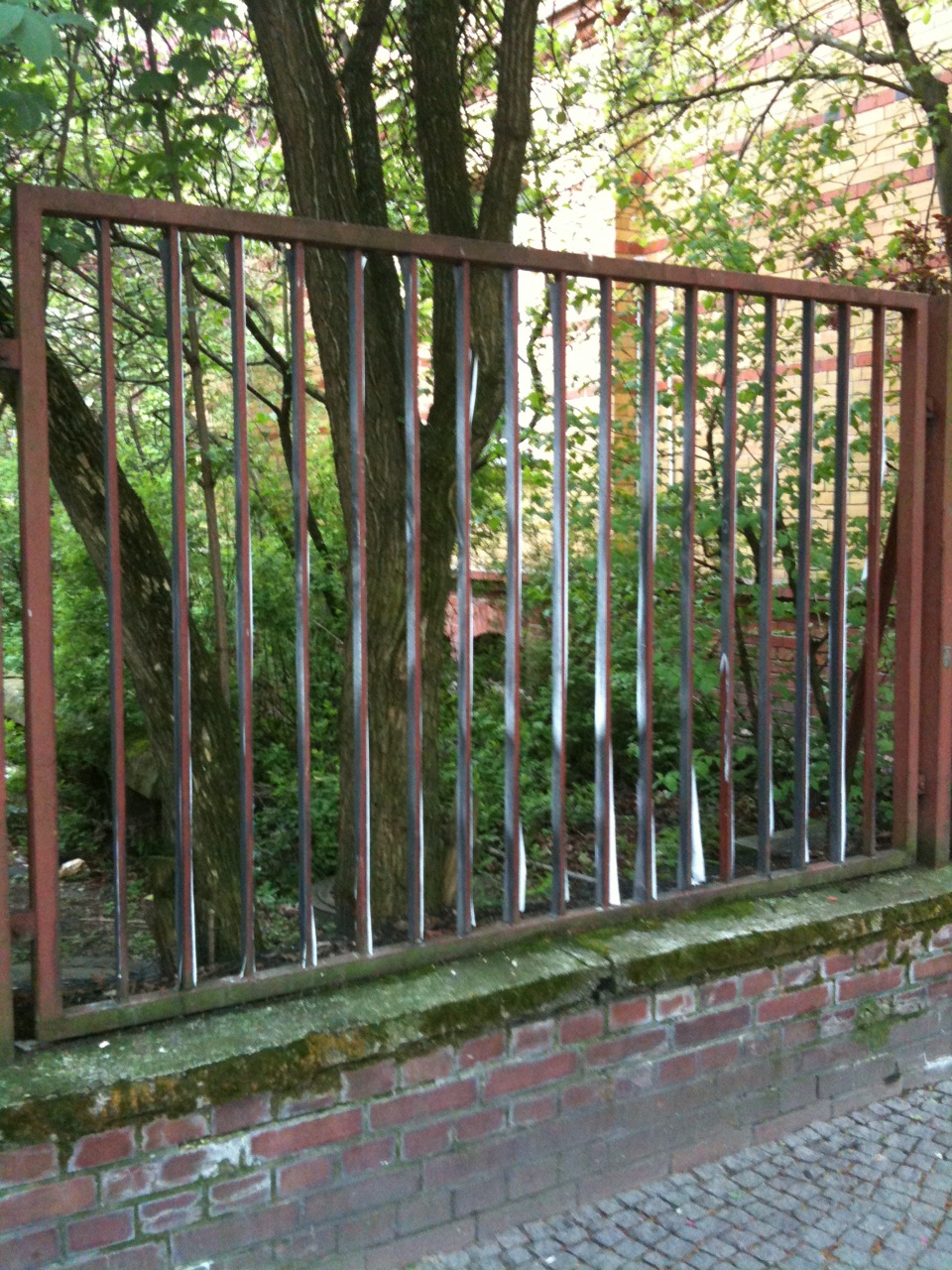
So here's a fence located in Bergmannstrasse, Berlin:


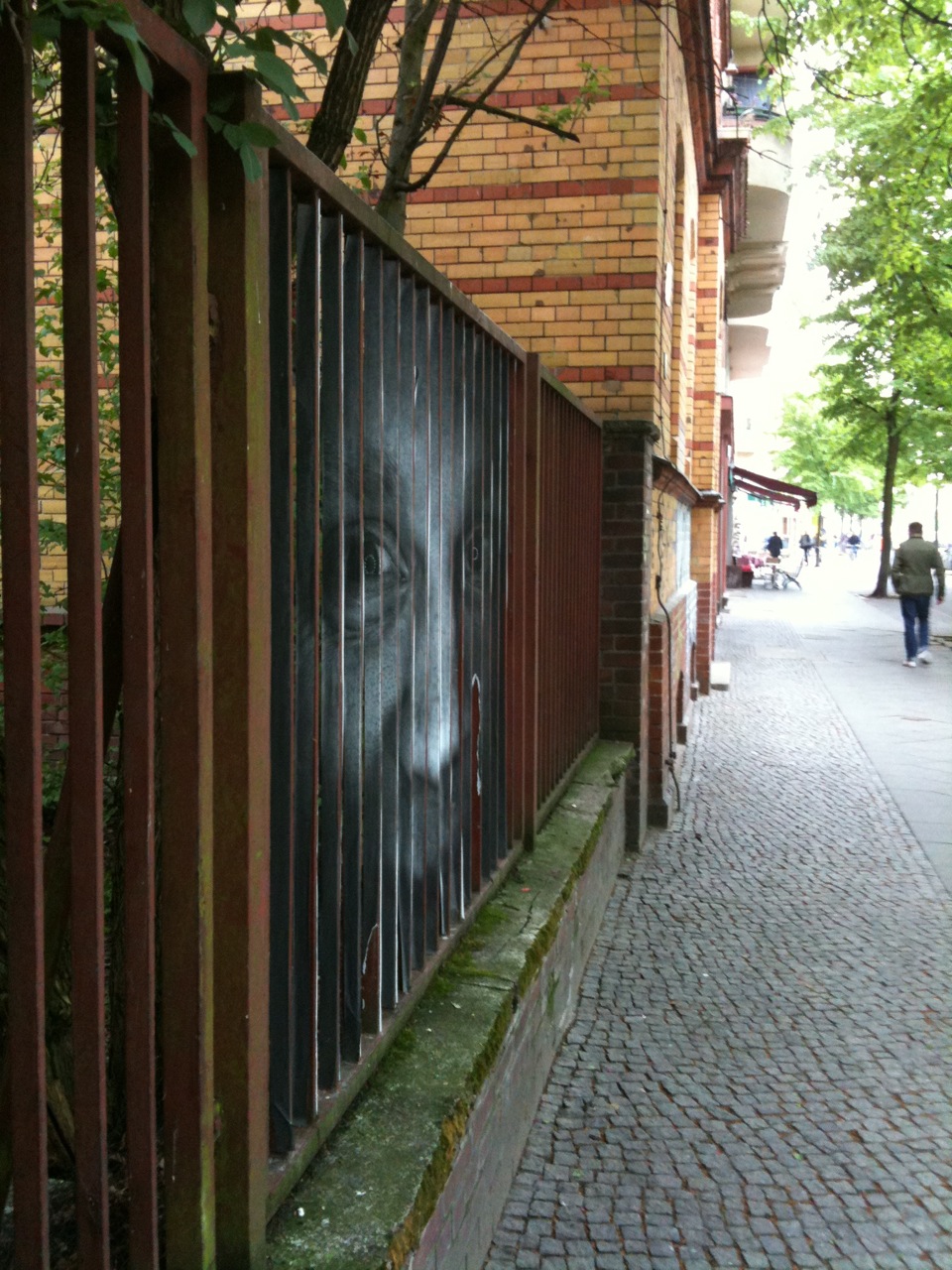
It seems ordinary from this perspective, though it kind of looks like someone threw a paint bucket at it or pigeons have been there. However simply walking a bit and seeing it from another angle reveals something quite creative and a tad creepy...


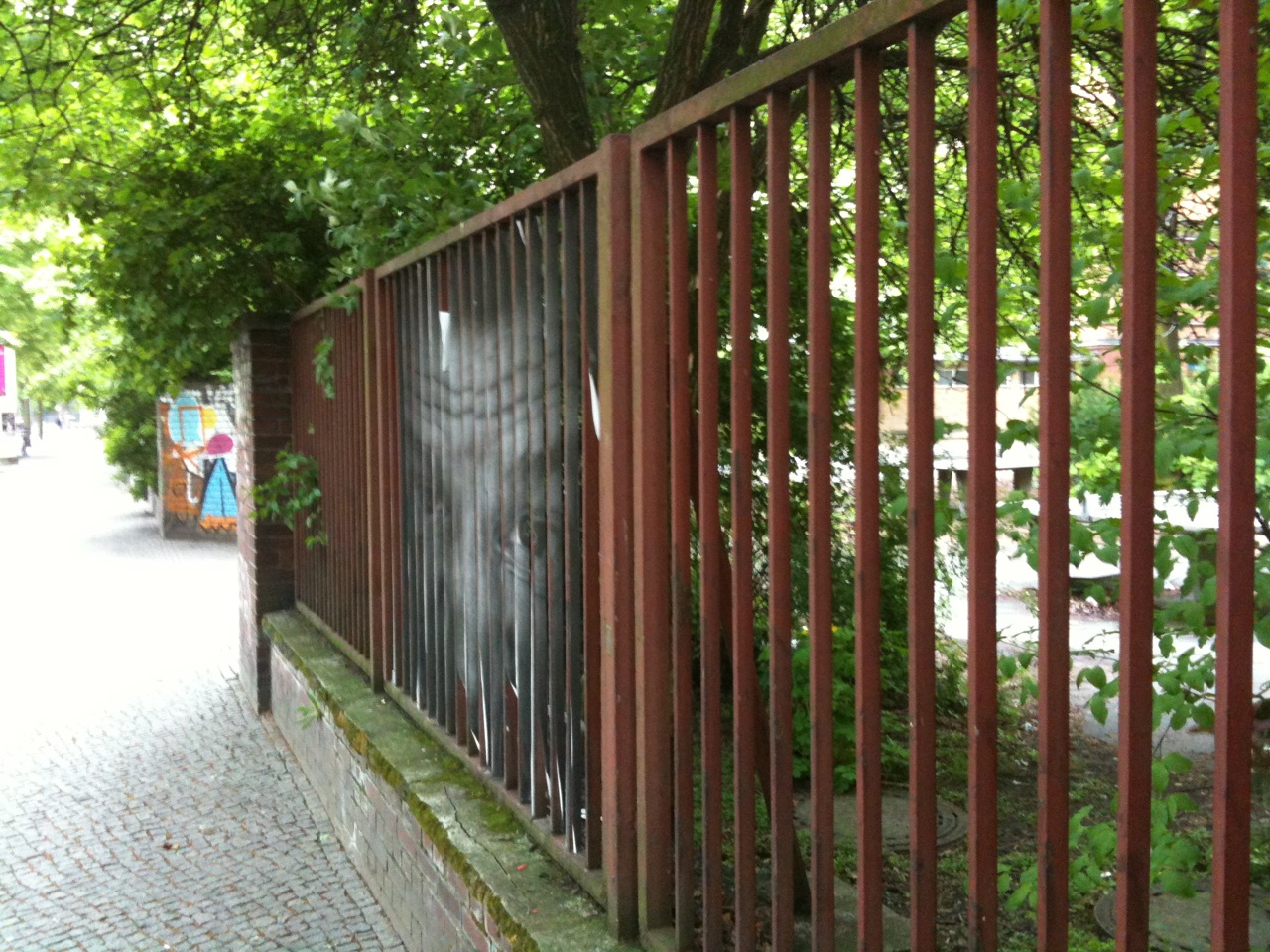
...and from the other angle:


Though a little odd and not completely attractive, it does work in livening up a space and creating a point of interest for passers-by to gander at and perhaps help inspire their own creativity.

Saturday, May 15, 2010

Suburb vs. City. Who will win?

The Brookings Institution’s analysis of the 2000-2008 USA census data has interesting results. For the first time ever:
“a majority of all racial and ethnic groups in large metro areas live outside the city. Suburban Asians and Hispanics already had topped 50 percent in 2000, and blacks joined them by 2008, rising from 43 percent in those eight years”. – Associated Press.

There’s still a lean towards white residents in suburbia, but what this analysis shows is that the traditional suburban makeup is changing, and indeed becoming more multi cultural. ‘White flight’ is in reversal.

A reason for this pattern according to Brookings Institution is that;

“city growth spread and accelerated between 2006 and 2008, as many core urban areas realized a “windfall” of residents due to the impact of the housing slump on movement to the suburbs”.


The implication of this is that suburbs are now holding poorer populations. This leads to the question, will suburbs be the new slums?

In terms of urban design this white flight reversal can be seen as favourable. Traditionally white families are a conventional lot and want their quarter acre section with the white picket fence. However this data suggests that more compact urban design – with smaller dwellings and section- can be viably popularised amongst a now wider market, minorities and whites. This more sustainable urban design, rather than sprawl, will be beneficial.

Wednesday, April 21, 2010

Reverse Graffiti

A new kind of urban art has recently surfaced. It's called 'Reverse Graffiti' and basically involves artists graffiti-ing walls - but not with spray paint cans. Instead they scrub the grit and grime off dirty concrete walls and create fresh artwork.


The effect created is pretty neat while ridding the environment of the unpleasantness of grime and dirt. This simple idea really helps to beautify the urban environment. It's a pretty cheap and effective way to make an unsightly wall look a lot better. Perhaps it may even deter 'real' graffiti too..

For more insight watch the video below, found at http://reversegraffitiproject.com/

Tuesday, April 20, 2010

Growth Concept

An assignment I completed at university in 2009 involved creating a Growth Concept Strategy for Rodney District, Auckland, looking ahead until 2050. This was assigned to us because Aucklands population is increasing steadily and Rodney District is a key area in which this growth can be accommodated.

A specific area of Rodney (Kumeu) was further examined. I proposed that 30,000 residents lived there by 2050 (a fair increase from what it is now). This gave a moderately high gross density of 41 people per ha.

The ‘pedestrian pocket’ theory is used in my proposed town design. The town will be developed along a linear pattern in line with a new light rail. ‘Pockets’ of development will exist along the light rail line. Each pocket will be of mixed use, however some will have more of a focus than others (eg.shopping centre, cultural centre etc).


This type of design allows for housing to be nearer services and employment. Many will be in 400m walkable distance, while feeder buses will be provided to others. In essence it is like a linear version of Ebenezer Howards 'Garden City' idea, very much focused on concentrated urban design as opposed to sprawl. In general I think the pedestrian pocket theory explained in The Pedestrian Pocket Book (1989) is an excellent idea, focusing on walkable, public transport orientated cities in a fairly compact form.

Building Typology

For a university assignment back in 2008, I had to explore different building typologies and the merits and disadvantages of each. I stated that it is important to establish the performance of different typologies when considering the development of an area where the inclusion of housing is concerned”. This is because different typologies have different characteristics. I assessed these characteristics against some basic criteria:

Private Realm: room size and shape, natural light and ventilation, orientation, noise, outdoor space, public/private front and storage space.

Communal Realm:
mix of bedroom numbers within a building, number of dwellings, resident profile, safety.

Public Realm:
walking distance to things, public open space, surrounding buildings.

An interesting example of row housing I found is located in Hatfield, London:

‘The Ryde’ is a fairly upper-class residential development in London. There are a total of 28 house units all on one level. It is an attractive neighbourhood, hence the development of aesthetically pleasing modern look buildings. They are 1 -4 bedroom houses thus providing for resident diversity.

The depth of the row houses means there are no windows either side. To provide natural light and ventilation however there is a patio centrally located in the larger houses. The inner court also provides a completely private outdoor space, along with the semi private front and back yards. Numerous skylights in the larger houses also provide light to the deep building layout.

There are several communal park/garden spaces and play areas such as tennis courts within the complex. These communal facilities would enhance rather than hinder residents getting to know each other. An unfortunate disadvantage is that directly to the west of the complex is a railroad running parallel nearby the length of the complex. This makes an otherwise short journey to several facilities more difficult as pedestrian movement is limited.

Housing typologies have great influence over the 'feel' and demographic of a neighbourhood, so should be shown great consideration when being considered.

Wednesday, April 14, 2010

Visualising Traffic Patterns

A guy named Pedro M Cruz has put together an interesting video. It's cool to see a neat graphical interpretation of something so mundane as traffic.

Pedro's explanation:
'One month (October 2009) of traffic information (1534 vehicles) is condensed in a 24h day. The arteries are colored in a way capable to represent average traffic speeds (the greenish and cooler represents high traffic velocity, and the reddish and hotter, corresponds to sluggish traffic). There is a visual emphasis on areas where the traffic is predominantly slow'.


Location: Lisbon, Portugal.

This video could do with some music though.
For more info go to: http://vimeo.com/pmcruz


Sunday, April 11, 2010

The Wall of Green

We hear of green roofs a lot but not so much green walls. This is probably because in theory it's great but in practice green walls take a lot of effort. However the latest large scale green wall has emerged on PNC Financial Services Group Inc's building in downtown Pittsburgh. 'The wall is made up of 602 two-foot square panels. Each panel contains 24 evergreen plants'. The panels were anchored into the buildings frame after some of the granite facade was removed.


Not only is this visually awesome but it obviously has environmental benefits. 'The vertical garden, similar to a green roof, will help to cool the 30-story building. Preliminary studies show the south-facing living wall will be 25 percent cooler behind the wall than ambient temperatures'. A man in the green wall industry states that 'green roof installations have increased at about 30 percent a year over five years'. However it will be a while until this idea is widely used because 'on average green walls cost about $100 to $125 a square foot'.

In the mean time we can admire the public art the walls inadvertently create, whilst wondering how the plants are watered in the summer and who prunes and takes out the dead ones...


Monday, April 5, 2010

Traffic Lights

This neat design by Damjan Stankovic called 'Eko', is an alternative to the traffic light's widely used now. The Eko light claims to help the environment and road safety. This simple concept is quite useful, allowing drivers and pedestrians alike see how long until a light phase ends.
'Since you know exactly how long you have to wait you can sit back and clear your head for a while. No need to keep your foot on the gas. Relax.'
This seems like a pretty handy idea, and would be helpful in reducing the stress and anticipation that can occur at traffic lights. Some people argue that it'll make people speed off faster. To help counteract this Stankovic has only designed for this technique to work on the red light as opposed to the green.


I can see this design being widely implemented, apparently similar concepts have been used in some countries.

Urban Design Argued


'The Value of Urban Design' is a report put out by the Ministry for the Environment, New Zealand in 2005. Basically it's a comprehensive document that details whether or not there is a case for good urban design. New Zealand doesn't really have an established history in the urban design department, with little robust examples. This document however is published to assist the public and private sector e.g. helping evaluate projects in the urban environment.

This document conclusively proves that urban design does have many benefits:
• Good urban design can offer significant benefits to the community; conversely, poor design can have significant adverse effects on the urban environment, society and economy.

• While good urban design sometimes costs more upfront, this is not necessarily the case; moreover, long-term costs can be avoided.

• Communities value the better quality of life that good urban design can deliver.

• Urban design can affect people’s ability and willingness to undertake physical exercise: good design can offer health benefits.

• Urban design can help make towns and cities safer and more secure.

• Urban design elements are interconnected: urban design is most effective when a number of elements come together (eg, mixed use, density and connectivity).

Evidence of the benefits of urban design were categorised under the following eight core urban design elements:

- Local character
- Connectivity
- Mixed use
- Adaptability
- High quality public realm
- Integrated decision-making
- User participation
- Density

Further, more in-depth information can be found by accessing the document through the MfE's website: http://www.mfe.govt.nz/publications/urban/value-urban-design-full-report-jun05/

Thursday, April 1, 2010

Obama for High Speed Rail

Obama has recently announced his plans for the government to heavily invest in High Speed Rail (HSR). His package includes $8 billion for high-speed rail to be spent over two years and an additional $1 billion a year being budgeted over the next five years. He reasons for this large scale infrastructure investment:

"What we need, then, is a smart transportation system equal to the needs of the 21st century, a system that reduces travel times and increases mobility, a system that reduces congestion and boosts productivity, a system that reduces destructive emissions and creates jobs.”
“Imagine whisking through towns at speeds over 100 miles an hour, walking only a few steps to public transportation, and ending up just blocks from your destination,” Mr. Obama said. “It is happening right now; it’s been happening for decades. The problem is, it’s been happening elsewhere, not here.”

Americas current HSR is basically non existent as Obama points out. In terms of public transportation America is lagging in many aspects. Highways are congested and airports are getting increasingly busier, all impacting on the economic growth of the country. His desire for HSR stems from how well overseas examples have worked such as China's HSR system and the TGV of France.

Ofcourse, from a planners perspective it can be argued that HSR could lead to more sprawl. It is universally agreed, that urban living and compact cities are a more sustainable option than sprawl. HSR could encourage more people to leave the urban area and further influence suburban sprawl, creating more land and energy usage. However with appropriate land use policies in place, sprawl can be curtailed and rather the focus can be placed on Transport Orientated Development, that is building communities close to points of transit - limiting sprawl and encouraging more sustainable practises such as walking to transit points.

Under one of many of Obamas strokes of genius - public transport investment - one of the first initiatives of the HSR package is occurring in the Golden State of California. They have received $2.3 billion in funds to build an 800mile system that spans from San Diego to San Fransisco. This line is envisioned to provide many jobs, positive environmental benefits as well as decreasing the States dependence on oil.

The following videos are of respectively the graphical demonstration of the proposed California line, and the Business Plan of California's High Speed Rail Authority.

Developments in this groundbreaking USA project will be interesting to follow.


Planning as a host nation

For any country hosting a large event, major planning effort is required to cater to the influx of people and to also promote the greatness of the host city whilst it's in the international spotlight. Auckland will be hosting the Rugby World Cup in 2011. An issue that has been identified is the lacking provision of a large outdoor area for people to gather and celebrate. The Auckland City Council has bought a large wharf area, known as 'Queens Wharf'.


Design submissions have been called upon to develop this site. The vision for it is to be 'party central' for the World Cup. However, with the time pressure faced the site will be developed temporarily to cater to the needs the World Cup demands and a more permanent design will be put in place later on. This is a stunning site, and it would be a shame to make an ad-hoc permanent development there.

London faces a similar issue in 2012 with the advent of the Olympic Games. With this event being so large in scale, the city wants to portray itself in a positive light to the international audience, but likewise suffers from time constraints. Submissions have been called for a tourist attraction that can help symbolise the games and make the city stand out. A submission of note is 'The Cloud'.


This is a visually stunning but also rather complex design. It acts as an observation deck but also a broadcaster of information. Another neat feature is that it's completely self sustaining. Even though this monument may not be selected, the team working on it hope to build it. More information can be found at the projects website: http://www.raisethecloud.org/


Let's hope Boris Johnson really gets behind this!

As Monet said... “Without the fog, London wouldn’t be a beautiful city”.

Wednesday, March 31, 2010

Creating an active city!


If there's one thing that's going to be associated with the current era, it will be our overwhelming desire to consume. A branch of this consumption is of course our propensity to consume food and unfortunately many of us have also become accustomed to the lack of exercise in our everyday lives. Too much food + Little exercise = Obesity. How does this relate to planning and streets? Well, it can be argued that planning and city design has aided this national dilemma, unintentionally of course. So, the
New York City Department of Design + Construction has come up with a great document addressing this pressing issue. 'Active Design Guidelines' is an interesting document that focuses on peoples health rather than the usually broad sustainability stuff that focuses on the planets health.

"Today, architectural and urban design too often support unhealthy rather than healthy diets, and sedentary rather than active daily lifestyles. The Active Design Guidelines aim to reverse these trends, by providing architects and urban designers in New York City and beyond with a manual for creating healthier buildings, streets, and urban spaces. Active design is environmental design that encourages stair climbing, walking, bicycling, transit use, active recreation, and healthy eating."

"A growing body of research suggests that evidence-based architectural and urban design strategies can increase regular physical activity and healthy eating."

Some practical points the guideline list include:

-Design accessible, pedestrian-friendly streets with high connectivity, traffic calming features, landscaping, lighting, benches, and water fountains;

-Improve access to full-service grocery stores and fresh produce;

-Provide facilities that support exercise such as centrally visible physical activity spaces, showers, locker rooms, secure bicycle storage, and drinking fountains.

The guideline also mentions the 5 D's: 'variables that are key to analyzing the relationship between urban design and travel patterns':

Density, Diversity, Design, Destination accessibility and Distance to transit.

These elements when broken down can act as a toolkit to assessing which urban designs are encouraging and can encourage individuals to travel more on foot. With obesity on the rise, and further pressure being put on our health systems, it is fundamental to acknowledge and act on the need to incorporate more 'active' planning strategies into our cities and towns.


Thursday, March 25, 2010

Density

I stumbled upon this amazing photography by Michael Wolf. One of his exhibitions has a theme of urban density. What's stunning about these photos is the shear number and repetition of buildings. The subject matter is 100% impervious surfaces. No nature to be seen. It really puts into perspective the human impact on the environment and how man-made elements dominate a lot of our visual environment.

The location is Hong Kong, as explained:

"One of the most densely populated metropolitan areas in the world, Hong Kong has an overall density of nearly 6,700 people per square kilometer. The majority of its citizens live in flats in high-rise buildings... Wolf investigates these vibrant city blocks, finding a mesmerizing abstraction in the buildings' facades."

From a planning perspective, the associated infrastructure that goes along with such densities is massive. Physical infrastructure such as transport, sewerage, water, electricity as well as social infrastructure such as provision of jobs, and general community wellbeing. It makes you wonder about an individuals wellbeing rather than the collective, living in such a dense area. One wonders how overwhelming it could be on a person.


Design on Paper

On the topic of good design and Melbourne, the following images of Melbourne's council plan and city logo demonstrate just how vibrant a city can make itself look with a bit of creativity and imaginative thinking...


Wednesday, March 24, 2010

Public Art


I am a great believer in the benefits of public art, and how installations can really enhance a city. Public art helps to strengthen the visual environment on a superficial level, but can also really contribute to a persons sense of place within their surroundings. Art installations exhibit a city's individual creativity and their propensity for innovation. Examples of this can be found throughout the world, however certain cities bring out their creative flair more than others. An example can be found in Melbourne, Australia.

'Blowhole', Duncan Stemler, Docklands Park.

Melbourne prides itself on being seen as a creative, fashionable city and continues to acquire this image through the development of particular arts related policies. Melbourne's 'Per Cent for Art Policy' is one such scheme that 'dedicates one per cent of the City's capital works commitments to the commissioning of new public artworks'. This strategy's aim is to enliven the city, and does just that. Projects such as the 'Blowhole' enhance amenity values and contribute to social cohesion.

A New Zealand example of a successful public work is located in Christchurch. This sculpture is a commemorative piece, and is in keeping with the surroundings. The natural fauna pattern bodes well with New Zealands image, whilst the shape itself is meant to mirror the spire of Christchurch Cathedral.

'Chalice', Neil Dawson, Cathedral Square.

A third example of great public art is located in Chicago. Labeled 'Cloud Gate', this sculpture has been nicknamed 'The Bean' due to its bean-like shape. This sculpture has a stunning presence in Millennium Park, and picks up and reflects the changes in light throughout the day. Dubbed as being transformative and iconic, it really enhances Chicago's cityscape. It creates a focal point in an otherwise fairly monotonous square. Focal points are important in a city as people identify with them, they stir a sense of pride and form a gathering point.

'Cloud Gate', Anish Kapoor, Millennium Park.

However, like most things in the public eye, public opinion will ensue. Support and strong opposition to such 'artworks' will always be had. 'The Berlin Holocaust Memorial' is a good example of this. Located in Berlin, it is a somewhat shocking and visually amazing piece of work. However, the emotional aspect of this commemorative piece is perhaps more deep and profounding than the object itself.

'The Berlin Holocaust Memorial', Peter Eisenman, Berlin.